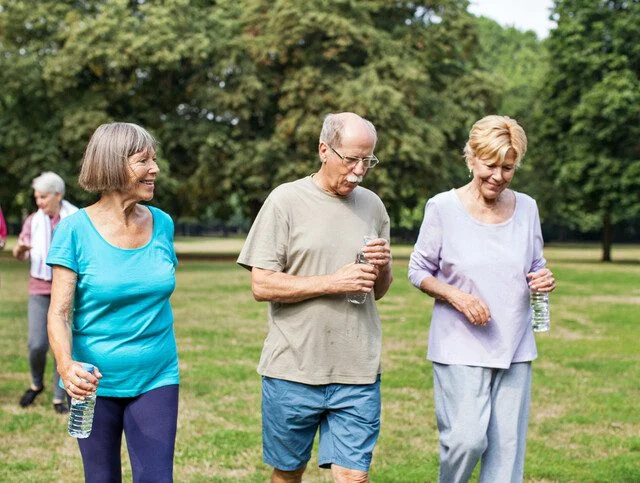
The environment surrounding your daily life does more than provide a backdrop—it determines how often you move, who you encounter, and how naturally social contact occurs. A home designed around solitude produces solitude. A community designed around shared life produces something considerably richer.
At Newcastle Place in Mequon, Wisconsin, that philosophy plays out across 52 wooded acres that balance the serenity of a natural setting with the social richness of a thoughtfully built community. Carriage homes and luxury apartments sit within a landscape that draws residents outside and into each other's company—while the spaces, programs, and atmosphere inside ensure that contact doesn't stop at the front door.
That combination carries real weight. The CDC identifies social isolation and loneliness as significant risk factors for dementia, heart disease, stroke, and depression in older adults—and the environments best equipped to address those risks are the ones where social engagement is a grounded foundation of daily life, not something residents have to pursue on their own. Newcastle Place was built to be exactly that kind of environment.
Key Takeaways:
- The physical and social design of a living environment directly influences how often older adults engage with others—and how meaningfully.
- Social isolation carries serious, well-documented health consequences for older adults, while consistent connection produces measurable protective benefits.
- At Newcastle Place, 52 wooded acres, resort-style amenities, and a community culture anchored in trust and warmth create daily conditions for lasting social engagement.
When Environment Becomes Social Infrastructure
Most people don't think of their living environment as something that either enables or inhibits social connection, but research increasingly suggests it should be one of the central considerations in deciding where to live as you age.
The National Institute on Aging identifies retirement, the loss of a spouse, and reduced mobility as among the most common contributors to decreased social engagement for older adults. These shifts don't diminish the desire for connection—they reduce the occasions for it. And when those occasions become scarce, health outcomes follow. The solution most supported by both research and lived experience is structural: place yourself in an environment where social contact arrives as a natural function of daily life.
Newcastle Place delivers that framework with a level of intentionality that extends from the landscape itself to the programming calendar to the way team members engage with residents. Just outside of Milwaukee, residents have both the space for quiet reflection and the proximity to neighbors, engaging spaces, and community life that keeps engagement effortless.
The Spaces That Make Connection Effortless
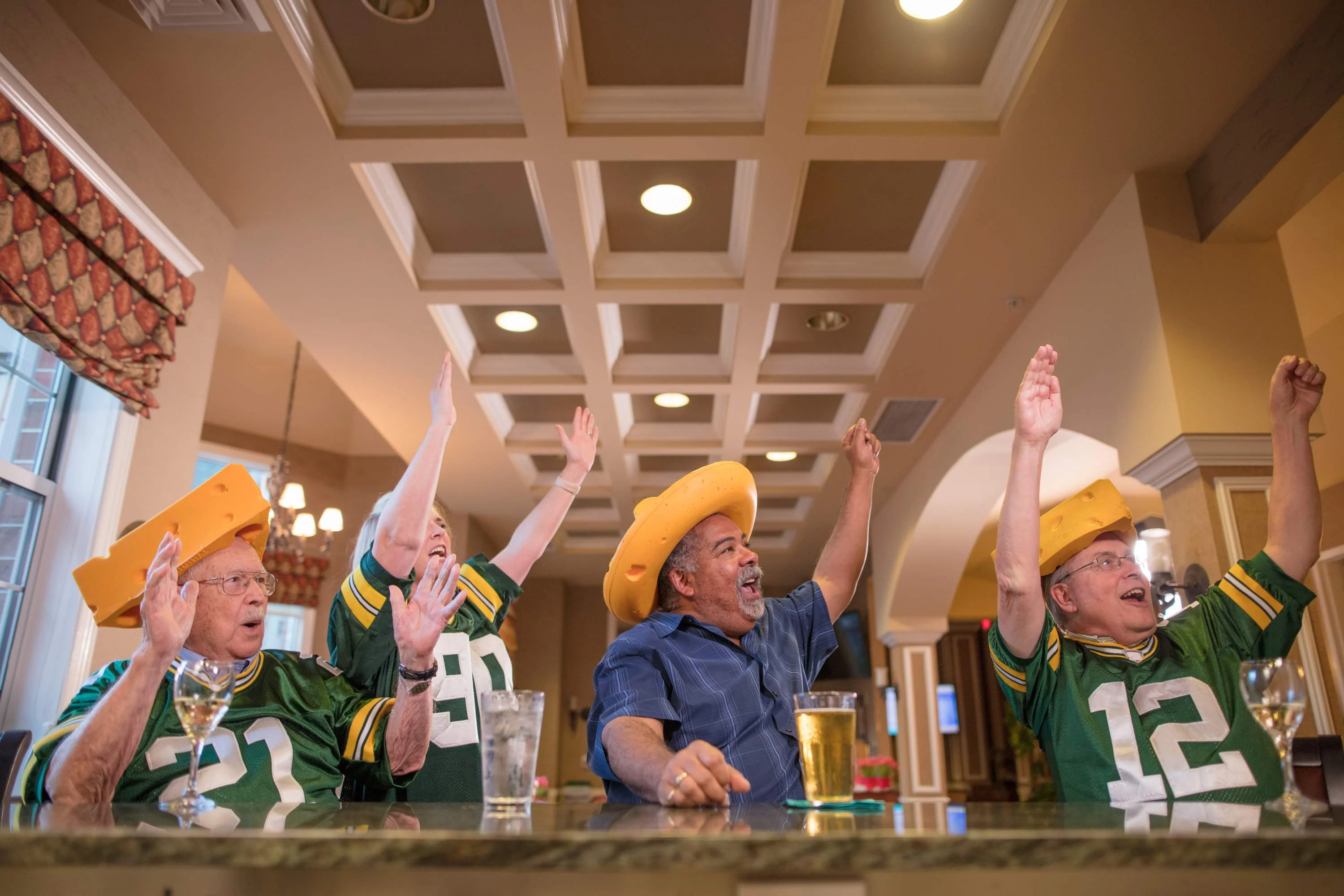
Inside Newcastle Place, the amenities read less like a list and more like a social ecosystem. Billiards rooms and game spaces invite casual, low-stakes interaction. A library and comfortable lounges provide the kind of unhurried setting where conversations deepen naturally. Outdoor gathering spaces and patios extend community life into the landscape, making the wooded grounds a living part of the social experience rather than simply a scenic one.
Resident-led activities and community programs give people recurring reasons to show up—and recurring exposure to the same faces is precisely what peer-reviewed research identifies as one of the most reliable builders of social bonds in older adults. An art studio, educational lectures, and programming add intellectual depth to the social calendar, drawing residents together around shared curiosity as much as shared proximity.
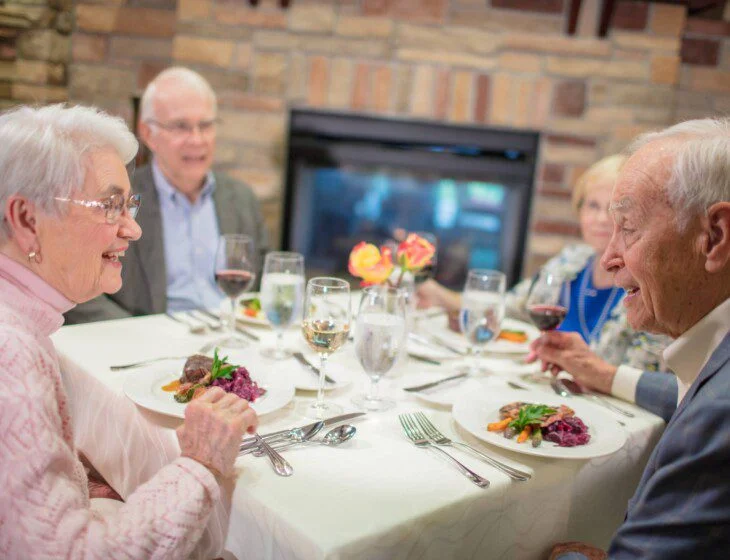
Dining at Newcastle Place plays a particularly important role. Chef-prepared meals served in welcoming venues transform the most ordinary part of the day into a rejuvenating opportunity to connect—one that happens multiple times daily and, over weeks and months, accumulates into the fabric of community life.
Trust, Continuity, and the Culture That Holds It Together
Survey research from U.S. News & World Report shows that senior living residents report significantly higher rates of daily social engagement and overall well-being than older adults living independently at home—and the communities that consistently produce those outcomes tend to offer something beyond good programming: they have a culture people trust.
Residents at Newcastle Place describe a community where team members are known by name, where the atmosphere is warm without being overwhelming, and where new residents find their footing socially with reassuring ease. That trust—between residents, and between residents and the team members who support them—creates a social environment where people feel both seen and settled.
A 2025 Forbes analysis on senior living and loneliness found that relationship quality within a community is the strongest predictor of well-being outcomes for older adults. At Newcastle Place, that quality is supported by four decades of experience as part of the Lifespace Communities network and reinforced daily by a team and residents who take care of one another.
Find Your People at Newcastle Place
Explore life at Newcastle Place in Mequon and see what it looks like to live somewhere where the setting is serene, the community is warm, and connection is built into every acre. Contact us to schedule a tour or speak with our team.