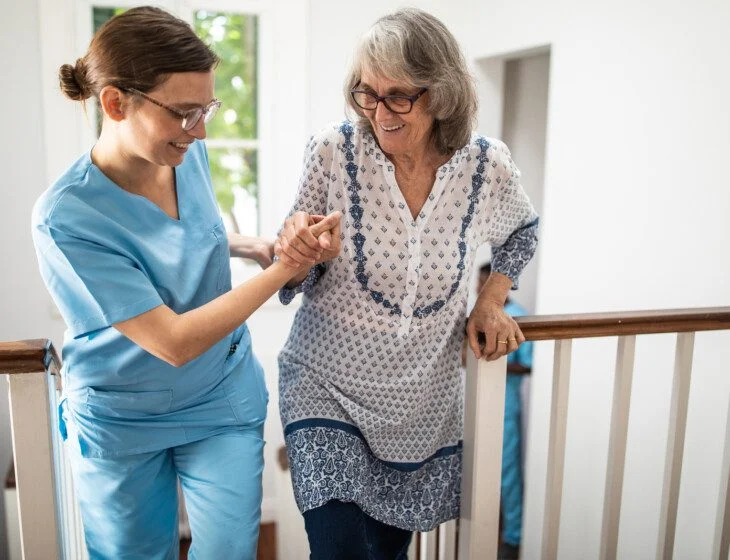
Creating a Safe Living Environment for Parkinson’s in the Mequon Area
For many families, the first priority after diagnosis is creating a safe living environment for Parkinson’s that reduces fall risk and supports everyday routines. Over time, Parkinson’s can affect balance, strength, and reaction time, making even familiar spaces more challenging to navigate. Small changes—like grab bars, better lighting, and thoughtful furniture placement—can go a long way, but there often comes a point when families look beyond Parkinson’s home safety tips and ask whether a senior living community might offer a more supportive setting.
Newcastle Place, a Life Care community in Mequon, WI, offers independent living, assisted living, memory care, skilled nursing, and rehabilitation all on one campus. For those seeking Parkinson’s care in Mequon, WI, and the North Shore area, this continuum of care allows residents to live in an environment built for older adults who want to live a purposeful life—with safety features and support woven into daily life.
How Parkinson’s Increases Safety Risks at Home
Parkinson’s disease can gradually change the way someone walks, turns, and reacts to obstacles. Common issues include:
- Shuffling steps and reduced arm swing, which make tripping more likely
- Stiffness and slowness, which make it harder to recover if balance is lost
- Freezing episodes when starting to move, turning, or going through doorways
- Fatigue that increases the risk of falls later in the day
At home, these changes can make everyday features—like loose rugs, stairs, or dim hallways—more hazardous. Families may find themselves constantly trying to “patch” the environment with new equipment and rearrangements. At some point, it may feel more realistic to consider an environment that started with safety in mind.
Key Elements of a Supportive Environment for Parkinson’s
A supportive environment for Parkinson’s focuses on making movement safer and routines easier. Useful features include:
- Wide, uncluttered hallways and common areas
- Non‑slip flooring and good lighting
- Grab bars and accessible bathroom layouts
- Seating with arms and appropriate height for safer transfers
- Easy access to elevators or single‑level living
At Newcastle Place, residences and common spaces are designed for older adults, making daily life easier for someone with Parkinson’s than in a typical single‑family home with stairs, narrow hallways, or uneven outdoor surfaces.
How Assisted Living at Newcastle Place Supports Safety and Independence
In assisted living at Newcastle Place, residents receive help with daily tasks while maintaining as much independence as possible. For someone living with Parkinson’s, this can include:
- Assistance with bathing, dressing, and grooming in safely equipped bathrooms
- Help with getting to and from meals, programs, and appointments
- Medication management to support timely dosing
- Staff trained to assist with transfers and to watch for changes in mobility or balance
Because the setting is staffed 24/7, families can feel more confident that someone is always available if a fall or urgent issue occurs. At the same time, residents can continue to enjoy privacy, social opportunities, and a home‑like environment.
Memory Care and Skilled Nursing for More Complex Needs
As Parkinson’s progresses, some people experience cognitive changes, more frequent falls, or health issues that require a higher level of clinical oversight. Newcastle Place’s memory care and skilled nursing neighborhoods are designed to provide:
- 24‑hour nursing care for individuals with complex medical needs
- Additional supervision and structure for those with cognitive changes
- Access to rehabilitation services, including physical, occupational, and speech therapy
- An environment where safety features and staffing levels are matched to higher‑acuity needs
This range of options means residents may be able to stay within the Newcastle Place community even if Parkinson’s symptoms significantly change their care needs.
Creating Daily Routines That Support Safety
A safe and supportive living environment is not just about the building; it is also about daily routines. In a Life Care community like Newcastle Place, routines can be structured to support someone with Parkinson’s by:
- Scheduling more demanding tasks for times of day when medications are working best
- Encouraging regular participation in exercise or movement programs appropriate for each resident
- Providing consistent cues and support around meals, sleep, and activities to reduce confusion or anxiety
- Monitoring for changes in mobility, mood, or function and adjusting support when needed
These routines can help someone feel more secure and confident as they move through their day.
When Families in the Mequon Area Might Consider a Community Setting
Families in Mequon and the greater Milwaukee area may want to explore a community like Newcastle Place when:
- Home modifications and in‑home supports no longer feel sufficient to manage fall risk or daily care
- A loved one is experiencing repeated falls or near‑falls
- Medication management has become complex or difficult to manage at home
- Care needs are putting significant strain on family caregivers’ health, work, or relationships
Touring a community early—before a crisis—gives families more time to evaluate fit and understand how Newcastle Place can support someone over the course of Parkinson’s.
Talking with Newcastle Place About a Safe and Supportive Environment
If you are thinking about how to create a safer, more supportive living environment for someone living with Parkinson’s, the team at Newcastle Place can answer questions about independent living, assisted living, memory care, and skilled nursing on campus. They can help you understand what day‑to‑day life looks like for residents with mobility or health challenges, and how support can change over time.
Important Note About Medical Advice
This article is intended for educational purposes only and is not a substitute for professional medical advice, diagnosis, or treatment. Always consult a physician, neurologist, or other qualified health provider with questions about Parkinson’s disease, safety concerns, or changes in symptoms.